How to Monetize Links Without a Website: A Strategic Guide for Traffic Owners
Many people assume you need a website to earn money online. In reality, monetized links allow publishers to generate revenue directly from outbound clicks. This guide explains how link monetization works and how to start using it with social media, communities, or messaging apps.
A common misconception among new publishers and creators is that generating revenue from online traffic requires a website. Blog posts, landing pages, and owned domains are viewed as the necessary infrastructure for display advertising, affiliate marketing, or sponsored content.
However, a significant portion of valuable traffic never lands on a website at all. It flows through social media comments, messaging app broadcasts, forum signatures, and community channels. For years, this outbound traffic remained unmonetized, representing a missed opportunity for people who could generate clicks but did not have the resources or the interest in building and maintaining a website.
Link monetization platforms have changed this dynamic. By inserting a revenue-generating layer between the click and the destination URL, traffic owners can capture advertising value from outbound traffic regardless of where the link originates. This article examines how monetized links work, where they perform best, and the strategic considerations for implementing them effectively.
Why Traditional Monetization Models Require a Website
To understand the significance of website free monetization, it helps to examine why conventional models depend on owned properties.
Display advertising networks (such as AdSense or Mediavine) require inventory, meaning actual page views where advertisements can be displayed. Without a website, there are no impressions to sell.
Affiliate marketing typically relies on contextual content. A product review, comparison guide, or tutorial creates the trust and intent necessary for conversions. Affiliate links placed in social media posts can generate commissions, but this method depends heavily on platform algorithms and reach, and revenue only occurs when users complete a purchase, a conversion that many traffic sources rarely produce.
Sponsored content requires an audience, but brands typically pay for access to that audience within a controlled environment. Without a website, creators must rely on platform specific monetization tools (YouTube ad revenue, TikTok creator funds) which offer limited control and often unfavorable revenue shares.
The common thread is that all these models treat traffic as a means to an end, whether that end is an impression, a click, or a sale. Link monetization, in contrast, treats the click itself as the revenue event.
How Monetized Links Work
Monetized links function as a routing mechanism between the user and the intended destination. When a user clicks a monetized link, they pass through an intermediary step before reaching the final URL. During that brief interstitial moment, an advertisement is displayed.
The Technical Flow
- Link generation: The publisher creates a monetized link through a platform, entering the destination URL and receiving a shortened or wrapped link to distribute.
- Traffic routing: When a user clicks the distributed link, they are directed to the monetization platform's server.
- Ad selection: The platform evaluates the user's geographic location, device type, and other available signals to select an appropriate advertisement from its demand partners.
- Ad display: A full-page interstitial ad appears briefly (typically 5-15 seconds) before the user is automatically redirected to the original destination.
- Revenue accrual: The publisher earns revenue based on the impression (CPM) or, in some models, completed views or engagements.
The Economic Model
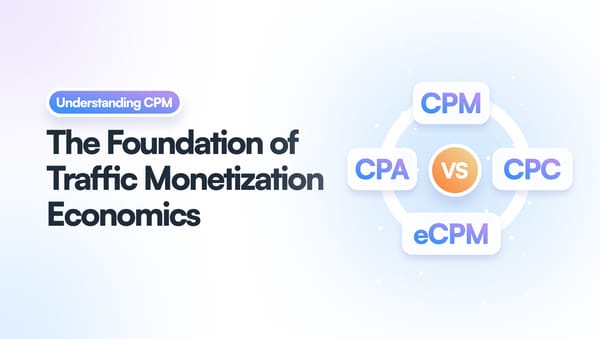
Revenue from monetized links is typically calculated on a Cost Per Mille (CPM) basis, meaning payment for every thousand advertising impressions. CPM rates vary significantly based on:
- Traffic geography: Users in Tier 1 countries (US, UK, Canada, Australia, Western Europe) command higher rates than emerging markets
- Device type: Desktop traffic often monetizes differently than mobile
- Traffic source: Some platforms attract higher quality user attention than others
- Time of day: Ad demand fluctuates, affecting fill rates and prices
The key metric for publishers is eCPM, or effective CPM, which represents the actual earnings per thousand clicks after accounting for factors such as fill rates and platform fees.
Traffic Sources That Work Without a Website
Not all traffic is equally suitable for link monetization. Understanding which sources align with the model helps set realistic expectations.
Social Media Platforms
Facebook groups and pages: Community managers who regularly share external resources can monetize outbound links without disrupting user experience. The key is to maintain value. If every link becomes a monetization opportunity, trust quickly erodes.
Twitter/X: High volume accounts sharing news, resources, or curated content can generate significant click volume. The platform's real-time nature makes it suitable for timely content with embedded monetized links.
LinkedIn: Professional content often includes links to articles, tools, or resources. For thought leaders and industry commentators, monetized links can capture value from outbound recommendations.
TikTok and Instagram: While link placement is restricted (primarily to bios or specific post types), creators with substantial followings can drive meaningful traffic through strategic calls to action.
Messaging Applications
Telegram channels: Broadcast channels with engaged audiences are especially effective for link monetization. Because distribution is direct rather than algorithm driven, these channels often generate higher click through rates than typical social media feeds.
WhatsApp and Signal broadcasts: Personal or semi-professional broadcasts to contacts or groups can monetize recommendations, though scale is limited by contact lists.
Discord servers: Community managers sharing external resources, game guides, or tools can implement monetized links for outbound content.
Forums and Online Communities
Reddit: Active contributors who provide value through resource links can monetize their outbound traffic, provided they respect community guidelines and avoid spam behavior.
Niche forums: Specialized communities (gaming, technology, hobbies) where members share external resources naturally. Long term forum participants with an established reputation can incorporate monetized links without immediately triggering moderation or suspicion.
Quora: Answer contributors who frequently reference external sources can monetize those outbound clicks while maintaining answer quality.
Content Platforms
Medium: Writers without their own domain can include monetized links in articles, capturing value from referral traffic to external resources.
Newsletter platforms: Even without a website, newsletter creators can monetize links within their email content, provided subscribers click through to external destinations.
The Monetization Flow: Step by Step
Understanding the complete flow helps publishers optimize for both revenue and user experience.
Step 1: Traffic Generation
The publisher creates value that motivates clicks. This could be a helpful resource, entertaining content, or useful information. The key is that users click because they genuinely want what is on the other side, not because they have been misled into clicking.
Step 2: Link Insertion
The publisher generates a monetized link through their chosen platform and distributes it across their traffic sources. Link placement should feel natural within the content context.
Step 3: User Click
When a user clicks, they expect to reach the promised destination. The monetization platform must balance revenue generation with maintaining that expectation.
Step 4: Ad Interstitial
The user sees an advertisement for several seconds. This is the revenue moment. The ad should be clearly distinguishable from the intended destination, and users should understand they'll be redirected automatically.
Step 5: Destination Delivery
After the ad completes, the user is sent to the original URL. The entire experience, from click to destination, should take no more than 10-15 seconds to minimize abandonment.
Step 6: Revenue Reconciliation
The platform aggregates impression data, applies CPM rates based on demand partner payments, and credits the publisher's account.
Workflow Example: Telegram Channel Monetization
Consider a Telegram channel curator who shares daily links to technology news articles. The channel has 15,000 subscribers, and each post generates approximately 800 clicks.
Without monetization: The curator spends time finding and sharing valuable content but receives no direct revenue. The traffic value flows entirely to the destination websites.
With monetized links: The curator creates monetized links for each shared article. At 800 clicks daily and an average eCPM of $12, daily revenue approximates $9.60. Monthly, this generates nearly $300 from the same activity that previously produced zero direct income.
Scale considerations: If the curator grows the channel to 50,000 subscribers and maintains similar engagement, monthly revenue could reach $1,000. At 100,000 subscribers with optimized traffic quality, $2,000+ monthly becomes achievable.
This example illustrates the core value proposition: traffic that previously had no direct monetization path now generates consistent revenue.
Practical Beginner Strategy
For those exploring link monetization without a website, a measured approach reduces risk while building understanding.
Phase 1: Audit Existing Traffic
Before implementing anything, document current traffic patterns. Which platforms generate clicks? What content drives engagement? How much traffic flows outbound monthly? This baseline informs whether monetization is worth pursuing.
Phase 2: Start Small
Implement monetized links on a single traffic source with a subset of content. Monitor:
- Click-through rates before and after monetization
- User feedback or complaints
- Revenue per thousand clicks
- Platform policy compliance
Phase 3: Optimize Based on Data
Use initial results to refine approach. High eCPM but declining engagement suggests user experience issues. Low eCPM but stable traffic suggests need for better traffic qualification.
Phase 4: Scale Gradually
Expand monetization to additional traffic sources only after validating performance on initial tests. Maintain flexibility to revert changes if user experience degrades or platform policies shift.
Strategic Recommendations
Link monetization without a website represents a legitimate opportunity for traffic owners, but success requires strategic thinking rather than tactical shortcuts.
Treat traffic as an asset. The revenue potential of outbound clicks depends on their quality, consistency, and source. Invest in building genuine audience relationships rather than chasing quick monetization.
Prioritize user experience. The most sustainable approach balances revenue generation with maintaining trust. Transparent communication about how links function, reasonable ad durations, and consistent delivery of promised value preserve long term traffic.
Diversify traffic sources. Reliance on any single platform creates concentration risk. Building presence across multiple channels provides stability if policies or algorithms change.
Monitor metrics holistically. eCPM matters, but so do engagement trends, click-through rates, and user retention. Short-term revenue optimization should not compromise long-term traffic sustainability.
Understand the ecosystem. Link monetization connects publishers with advertisers through demand partners. Recognizing how ad pricing works, what influences CPM rates, and how traffic quality affects demand helps publishers make informed decisions.
Conclusion
The belief that website ownership is prerequisite for traffic monetization reflects legacy models rather than current possibilities. For creators, community managers, and publishers who generate outbound traffic across social platforms, messaging apps, and online communities, monetized links offer a mechanism to capture value from existing activity.